Enhanced production of nitric oxide may contribute to the induction of detrusor underactivity in sucrose fed rats
Main Article Content
Keywords
Adenosine-triphosphate, cholinergic receptor, detrusor underactivity, nitric oxide, purinergic receptor
Abstract
Objective: In a previous study we showed that sucrose feeding creates cystometric properties resembling detrusor underactivity (DU) associated with enhanced production of nitric oxide (NO) in rats. Our present objective was to evaluate the possible role of P2X-purinergic and cholinergic receptors as molecular mechanisms underlying DU-like conditions associated with enhanced production of NO and altered contractile properties in rat bladder strips. Materials and methods: Female Sprague-Dawley rats had ad-libitum access to 5% sucrose in water for two to four weeks. Isometric detrusor contractions were characterized in response to electrical field stimulation, the cholinergic agonist carbachol, the P2X agonist alpha, beta-methylene-ATP or KCl-induced depolarization. ATP and NO release rates were determined from bladder strips after stimulation of cholinergic or P2X-type purinergic receptors.
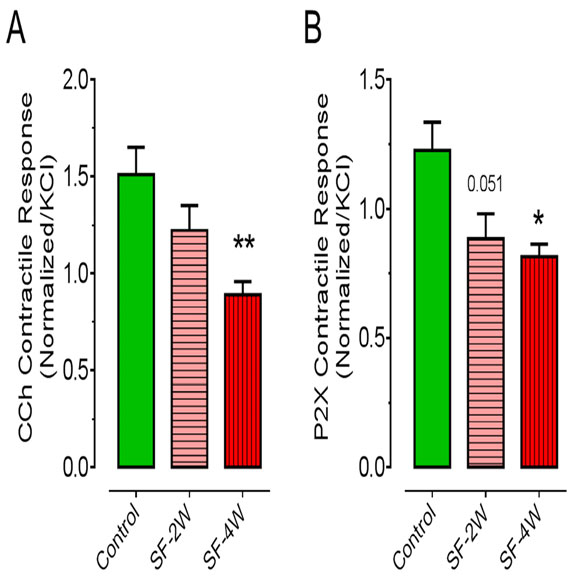
Results: Electrical field stimulations generated stronger contractile responses in the strips from sucrose fed animals, while KCl induced similar contractions. The release of ATP after cholinergic or purinergic stimulation was similar in control or sucrose fed bladder strips. Nonetheless, NO production was significantly higher when pharmacologically triggered with either cholinergic or purinergic stimulation in the bladder strips from rats drinking sucrose for four weeks. The contractile responses to carbachol or abMe-ATP were also significantly reduced in this group.
Conclusions: Detrusor contractions in these underactive-like conditions are gradual, and may be generated by excessive NO production that is mediated by individual activation of cholinergic or purinergic receptors, with higher effects by the latest. Our results suggest that nitric oxide production and not impaired contractile mechanisms are involved in this rat model of detrusor underactivity.
Results: Electrical field stimulations generated stronger contractile responses in the strips from sucrose fed animals, while KCl induced similar contractions. The release of ATP after cholinergic or purinergic stimulation was similar in control or sucrose fed bladder strips. Nonetheless, NO production was significantly higher when pharmacologically triggered with either cholinergic or purinergic stimulation in the bladder strips from rats drinking sucrose for four weeks. The contractile responses to carbachol or abMe-ATP were also significantly reduced in this group.
Conclusions: Detrusor contractions in these underactive-like conditions are gradual, and may be generated by excessive NO production that is mediated by individual activation of cholinergic or purinergic receptors, with higher effects by the latest. Our results suggest that nitric oxide production and not impaired contractile mechanisms are involved in this rat model of detrusor underactivity.
Metrics
Metrics Loading ...
References
1. Drake MJ, Williams J, Bijos DA (2014) Voiding dysfunction due to detrusor underactivity: an overview. Nat Rev Urol 11: 454-464.
2. Osman NI, Chapple CR, Abrams P, Dmochowski R, Haab F, et al. (2014) Detrusor Underactivity and the Underactive Bladder: A New Clinical Entity? A Review of Current Terminology, Definitions, Epidemiology, Aetiology, and Diagnosis. Eur Urol 65: 389-398.
3. Fowler CJ, Griffiths D, de Groat WC (2008) The neural control of micturition. Nat Rev Neurosci 9: 453-466.
4. Miyazato M, Yoshimura N, Chancellor MB (2013) The other bladder syndrome: underactive bladder. Rev Urol 15: 11-22.
5. de Groat WC, Yoshimura N (2009) Afferent nerve regulation of bladder function in health and disease. Handb Exp Pharmacol 194: 91-138.
6. Fry CH, Sahai A, Vahabi B, Kanai AJ, Birder LA (2014) What is the role for biomarkers for lower urinary tract disorders? ICI-RS 2013. Neurourol Urodyn 33:602-605.
7. Gonzalez EJ, Merrill L, Vizzard MA (2014) Bladder sensory physiology: neuroactive compounds and receptors, sensory transducers, and target-derived growth factors as targets to improve function. Am J Physiol Regul Integr Comp Physiol 306: R869-R878.
8. Ochodnicky P, Cruz CD, Yoshimura N, Michel MC (2011) Nerve growth factor in bladder dysfunction: contributing factor, biomarker, and therapeutic target. Neurourol Urodyn 30: 1227-1241.
9. Chess-Williams R (2004) Potential therapeutic targets for the treatment of detrusor overactivity. Expert Opin Ther Targets 8: 95-106.
10. Smith CP, Gangitano DA, Munoz A, Salas NA, Boone TB, et al. (2008) Botulinum toxin type A normalizes alterations in urothelial ATP and NO release induced by chronic spinal cord injury. Neurochem Int 52: 1068-1075.
11. Drake MJ, Williams J, Bijos DA (2014) Voiding dysfunction due to detrusor underactivity: an overview. Nat Rev Urol 11: 454-464.
12. Munoz A, Smith CP, Boone TB, Somogyi GT (2011) Overactive and underactive bladder dysfunction is reflected by alterations in urothelial ATP and NO release. Neurochem Int 58: 295-300.
13. Liu G, Daneshgari F (2005) Alterations in neurogenically mediated contractile responses of urinary bladder in rats with diabetes. Am J Physiol Renal Physiol 288: F1220-1226.
14. Liu G, Daneshgari F (2006) Temporal diabetes- and diuresis-induced remodeling of the urinary bladder in the rat. Am J Physiol Regul Integr Comp Physiol 291: R837-843.
15. Xiao N, Wang Z, Huang Y, Daneshgari F, Liu G (2013) Roles of Polyuria and Hyperglycemia in Bladder Dysfunction in Diabetes. J Urology 189: 1130-1136.
16. Sekido N, Jyoraku A, Okada H, Wakamatsu D, Matsuya H, et al. (2012) A novel animal model of underactive bladder: Analysis of lower urinary tract function in a rat lumbar canal stenosis model. Neurourol Urodyn 31: 1190-1196.
17. Liu G, Li M, Vasanji A, Daneshgari F (2011) Temporal diabetes and diuresis-induced alteration of nerves and vasculature of the urinary bladder in the rat. BJU Int 107: 1988-1993.
18. Brading AF, Brain KL (2011) Ion channel modulators and urinary tract function. Handb Exp Pharmacol: 375-393.
19. Ruggieri MR, Sr., Braverman AS (2006) Regulation of bladder muscarinic receptor subtypes by experimental pathologies. Auton Autacoid Pharmacol 26: 311-325.
20. Tong YC, Hung YC, Shinozuka K, Kunitomo M, Cheng JT (1997) Evidence of adenosine 5'-triphosphate release from nerve and P2x-purinoceptor mediated contraction during electrical stimulation of rat urinary bladder smooth muscle. J Urol 158: 1973-1977.
21. Scott RS, Uvelius B, Arner A (2004) Changes in intracellular calcium concentration and P2X1 receptor expression in hypertrophic rat urinary bladder smooth muscle. Neurourol Urodyn 23: 361-366.
22. Burnstock G (2013) Purinergic signalling in the lower urinary tract. Acta Physiol (Oxf) 207: 40-52.
23. Salas NA, Somogyi GT, Gangitano DA, Boone TB, Smith CP (2007) Receptor activated bladder and spinal ATP release in neurally intact and chronic spinal cord injured rats. Neurochem Int 50: 345-350.
24. Munoz A, Gangitano DA, Smith CP, Boone TB, Somogyi GT (2010) Removal of urothelium affects bladder contractility and release of ATP but not release of NO in rat urinary bladder. BMC Urol 10: 10.
25. Shen J, Harada N, Nakazawa H, Yamashita T, editors (2005) Involvement of the nitric oxide-cyclic GMP pathway and neuronal nitric oxide synthase in ATP-induced Ca2+ signalling in cochlear inner hair cells. Eur J Neurosci 21: 2912-2922.
26. Ferguson AC, Sutton BW, Boone TB, Ford AP, Munoz A (2014) Inhibition of urothelial P2X3 receptors prevents desensitization of purinergic detrusor contractions in the rat bladder. BJU Int. 2014 Nov 28. doi: 10.1111/bju.13003. [Epub ahead of print]
27. Cockayne DA, Hamilton SG, Zhu QM, Dunn PM, Zhong Y, et al. (2000) Urinary bladder hyporeflexia and reduced pain-related behaviour in P2X3-deficient mice. Nature 407: 1011-1015.
28. Somogyi GT, Yokoyama T, Szell EA, Smith CP, de Groat WC, et al. (2002) Effect of cryoinjury on the contractile parameters of bladder strips: a model of impaired detrusor contractility. Brain Res Bull 59: 23-28.
2. Osman NI, Chapple CR, Abrams P, Dmochowski R, Haab F, et al. (2014) Detrusor Underactivity and the Underactive Bladder: A New Clinical Entity? A Review of Current Terminology, Definitions, Epidemiology, Aetiology, and Diagnosis. Eur Urol 65: 389-398.
3. Fowler CJ, Griffiths D, de Groat WC (2008) The neural control of micturition. Nat Rev Neurosci 9: 453-466.
4. Miyazato M, Yoshimura N, Chancellor MB (2013) The other bladder syndrome: underactive bladder. Rev Urol 15: 11-22.
5. de Groat WC, Yoshimura N (2009) Afferent nerve regulation of bladder function in health and disease. Handb Exp Pharmacol 194: 91-138.
6. Fry CH, Sahai A, Vahabi B, Kanai AJ, Birder LA (2014) What is the role for biomarkers for lower urinary tract disorders? ICI-RS 2013. Neurourol Urodyn 33:602-605.
7. Gonzalez EJ, Merrill L, Vizzard MA (2014) Bladder sensory physiology: neuroactive compounds and receptors, sensory transducers, and target-derived growth factors as targets to improve function. Am J Physiol Regul Integr Comp Physiol 306: R869-R878.
8. Ochodnicky P, Cruz CD, Yoshimura N, Michel MC (2011) Nerve growth factor in bladder dysfunction: contributing factor, biomarker, and therapeutic target. Neurourol Urodyn 30: 1227-1241.
9. Chess-Williams R (2004) Potential therapeutic targets for the treatment of detrusor overactivity. Expert Opin Ther Targets 8: 95-106.
10. Smith CP, Gangitano DA, Munoz A, Salas NA, Boone TB, et al. (2008) Botulinum toxin type A normalizes alterations in urothelial ATP and NO release induced by chronic spinal cord injury. Neurochem Int 52: 1068-1075.
11. Drake MJ, Williams J, Bijos DA (2014) Voiding dysfunction due to detrusor underactivity: an overview. Nat Rev Urol 11: 454-464.
12. Munoz A, Smith CP, Boone TB, Somogyi GT (2011) Overactive and underactive bladder dysfunction is reflected by alterations in urothelial ATP and NO release. Neurochem Int 58: 295-300.
13. Liu G, Daneshgari F (2005) Alterations in neurogenically mediated contractile responses of urinary bladder in rats with diabetes. Am J Physiol Renal Physiol 288: F1220-1226.
14. Liu G, Daneshgari F (2006) Temporal diabetes- and diuresis-induced remodeling of the urinary bladder in the rat. Am J Physiol Regul Integr Comp Physiol 291: R837-843.
15. Xiao N, Wang Z, Huang Y, Daneshgari F, Liu G (2013) Roles of Polyuria and Hyperglycemia in Bladder Dysfunction in Diabetes. J Urology 189: 1130-1136.
16. Sekido N, Jyoraku A, Okada H, Wakamatsu D, Matsuya H, et al. (2012) A novel animal model of underactive bladder: Analysis of lower urinary tract function in a rat lumbar canal stenosis model. Neurourol Urodyn 31: 1190-1196.
17. Liu G, Li M, Vasanji A, Daneshgari F (2011) Temporal diabetes and diuresis-induced alteration of nerves and vasculature of the urinary bladder in the rat. BJU Int 107: 1988-1993.
18. Brading AF, Brain KL (2011) Ion channel modulators and urinary tract function. Handb Exp Pharmacol: 375-393.
19. Ruggieri MR, Sr., Braverman AS (2006) Regulation of bladder muscarinic receptor subtypes by experimental pathologies. Auton Autacoid Pharmacol 26: 311-325.
20. Tong YC, Hung YC, Shinozuka K, Kunitomo M, Cheng JT (1997) Evidence of adenosine 5'-triphosphate release from nerve and P2x-purinoceptor mediated contraction during electrical stimulation of rat urinary bladder smooth muscle. J Urol 158: 1973-1977.
21. Scott RS, Uvelius B, Arner A (2004) Changes in intracellular calcium concentration and P2X1 receptor expression in hypertrophic rat urinary bladder smooth muscle. Neurourol Urodyn 23: 361-366.
22. Burnstock G (2013) Purinergic signalling in the lower urinary tract. Acta Physiol (Oxf) 207: 40-52.
23. Salas NA, Somogyi GT, Gangitano DA, Boone TB, Smith CP (2007) Receptor activated bladder and spinal ATP release in neurally intact and chronic spinal cord injured rats. Neurochem Int 50: 345-350.
24. Munoz A, Gangitano DA, Smith CP, Boone TB, Somogyi GT (2010) Removal of urothelium affects bladder contractility and release of ATP but not release of NO in rat urinary bladder. BMC Urol 10: 10.
25. Shen J, Harada N, Nakazawa H, Yamashita T, editors (2005) Involvement of the nitric oxide-cyclic GMP pathway and neuronal nitric oxide synthase in ATP-induced Ca2+ signalling in cochlear inner hair cells. Eur J Neurosci 21: 2912-2922.
26. Ferguson AC, Sutton BW, Boone TB, Ford AP, Munoz A (2014) Inhibition of urothelial P2X3 receptors prevents desensitization of purinergic detrusor contractions in the rat bladder. BJU Int. 2014 Nov 28. doi: 10.1111/bju.13003. [Epub ahead of print]
27. Cockayne DA, Hamilton SG, Zhu QM, Dunn PM, Zhong Y, et al. (2000) Urinary bladder hyporeflexia and reduced pain-related behaviour in P2X3-deficient mice. Nature 407: 1011-1015.
28. Somogyi GT, Yokoyama T, Szell EA, Smith CP, de Groat WC, et al. (2002) Effect of cryoinjury on the contractile parameters of bladder strips: a model of impaired detrusor contractility. Brain Res Bull 59: 23-28.
Article Sidebar
Published
Jul 20, 2015
Article Details
How to Cite
Boone, T. B., & Munoz, A. (2015). Enhanced production of nitric oxide may contribute to the induction of detrusor underactivity in sucrose fed rats. Bladder, 2(2), e16. https://doi.org/10.14440/bladder.2015.50
Issue
Section
Research Articles
Authors who publish with the Bladder agree to the following terms:
- Authors retain copyright and grant the Bladder right of first publication with the work simultaneously licensed under a Creative Commons Attribution License that allows others to share the work with an acknowledgement of the work's authorship and initial publication in this journal.
- Authors are able to enter into separate, additional contractual arrangements for the non-exclusive distribution of the journal's published version of the work (e.g., post it to an institutional repository or publish it in a book), with an acknowledgement of its initial publication in this journal.
- Authors are permitted and encouraged to post their work online (e.g., in institutional repositories or on their website) prior to and during the submission process, as it can lead to productive exchanges, as well as earlier and greater citation of published work (See The Effect of Open Access).
Author Biographies
Timothy B. Boone, Houston Methodist Hospital; Weill Cornell Medical College; Houston Methodist Research Institute. Houston, TX. 77030
Department of Urology; ChairmanAlvaro Munoz, Houston Methodist Research Institute Houston, TX. 77030
Department of Regenerative Medicine & Tissue Engineering; Assistant Professor of Urology