The untapped potential of urine shed bladder cancer exosomes: biomarkers, signaling, and therapeutics
Main Article Content
Keywords
摘要
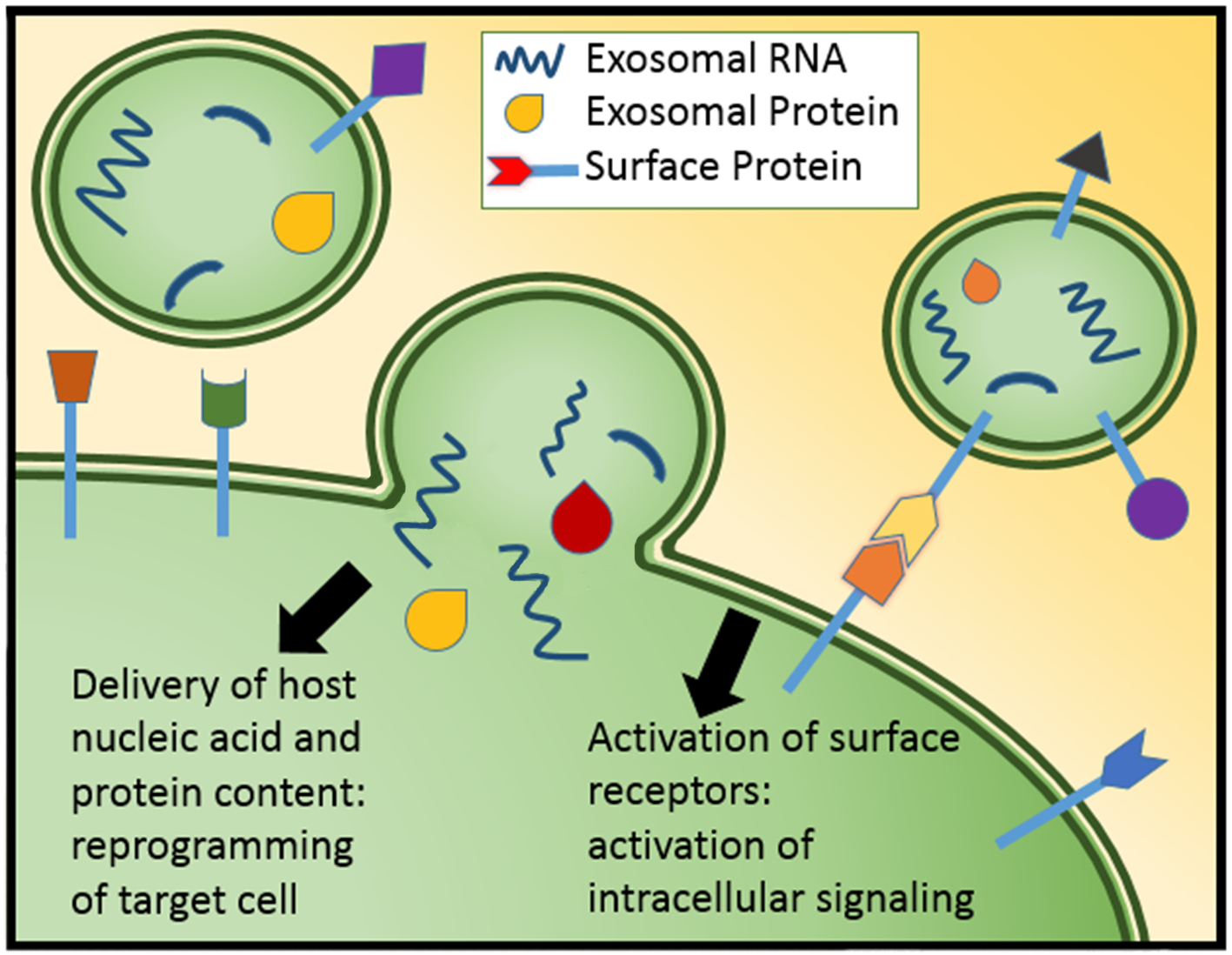
Exosomes are small, extracellular vesicles ranging in size from 30-100 nm. Their contents originate from the cytoplasm of their host cell, including nucleic acids, intracellular and membrane-bound protein. Cancer cells have been found to produce exosomes at a significantly higher rate than normal cells, and function in cell-to-cell signaling, with surface protein interaction with recipient cells, as well as deposition of host cell RNA into the recipient cell. Bladder cancer exosomes have demonstrated the propensity to augment the aggressiveness of tumors by increasing tumor cell migration and angiogenesis, while systemically circulating exosomes in other malignancies have also been shown to establish a favorable niche for metastatic disease. With respect to bladder cancer, these exosomes are additionally shed into the urine and represent a potential source of urinary biomarkers to be utilized for a non-invasive diagnosis. Further, while exosomes promote aggressiveness of bladder tumors, there is also potential for therapeutic endeavors on the horizon, with loading of silencing RNA and chemotherapeutics being avenues under investigation. Here we review the current literature on exosomes in bladder cancer as biomarkers, their role in cell-to-cell signaling, and as potential delivery agents for modulatory agents and chemotherapeutics.
##plugins.generic.paperbuzz.metrics##
参考
2. Akers JC, Gonda D, Kim R, Carter BS, Chen CC. (2013) Biogenesis of extracellular vesicles (EV): Exosomes, microvesicles, retrovirus-like vesicles, and apoptotic bodies. J Neurooncol 113: 1-11.
3. Hoorn EJ, Pisitkun T, Zietse R, Gross P, Frokiaer J, et al. (2005) Prospects for urinary proteomics: Exosomes as a source of urinary biomarkers. Nephrology 10: 283-290.
4. Henderson MC, Azorsa DO. (2012) The genomic and proteomic content of cancer cell-derived exosomes. FONC 2: 1-9.
5. Raposo G, Nijman HW, Stoorvogel W, Liejendekker R, Harding CV, et al. (1996) B lymphocytes secrete antigen-presenting vesicles. J Exp Med 183(3): 1161-1172.
6. Miyanishi M, Tada K, Koike M, Uchiyama Y, Kitamura T, et al. (2007) Identification of Tim4 as a phosphatidylerine receptor. Nature 450(7168): 435-439.
7. Valadi H, Ekström K, Bossios A, Sjöstrand M, Lee JJ, et al. (2007) Exosome-mediated transfer of mRNAs and microRNAs is a novel mechanism of genetic exchange between cells. Nat Cell Biol 9(6): 654-659.
8. Lötvall JO, Valadi H. (2007) Cell to cell signalling via exosomes through esRNA. Cell Adh Migr 1(3): 156-158.
9. Ramachandran S, Palanisamy V. (2012) Horizontal transfer of RNAs: Exosomes as mediators of intracellular communication. Wiley Interdiscip Rev RNA 3(2): 286-293.
10. Taylor DD, Gercel-Taylor C. (2008) MicroRNA signatures of tumor-derived exosomes as diagnostic biomarkers of ovarian cancer. Gynecol Oncol 110: 13-21.
11. Higginbotham JN, Beckler MD, Gephart JD, Franklin JL, et al. (2011) Amphiregulin exosomes increase cancer cell invasion. Curr Biol 21(9): 779-785.
12. Peinado H, Alečković M, Lavotshkin S, Matei I, Cost-Silva B, et al. (2012) Melanoma exosomes educate bone marrow progenitor cells toward a pro-metastatic phenotype through MET. Nat Med 18(6): 883-891.
13. Grange C, Tapparo M, Collino F, et al. (2011) Microvesicles released from human renal cancer stem cells stimulate angiogenesis and formation of lung premetastatic niche. Cancer Res 71(5): 5346-56.
14. Mathivanan S, Ji H, Simpson RJ. (2010) Exosomes: Extracellular organelles important in intercellular communication. J Proteomics 73(10): 1907-1920.
15. Li Y, Zhang Y, Qiu F, Qiu Z. (2011) Proteomic identification of exosomal LRG1: A potential urinary biomarker for detecting NSCLC. Electrophoresis 32: 1976-1983.
16. Zhou H, Yuen PST, Pisitkun T, Gonnzalez PA, Yasuda H, et al. (2006) Collection, storage, preservation, and normalization of human urinary exosomes for biomarker discovery. Kidney International 69: 1471-1476.
17. Théry C, Zitvogel L, Amigorena S. (2002) Exosomes: Composition, biogenesis and function. Nat Rev Immunol 2: 569-579.
18. Vlassov AV, Magaleno S, Setterquist R, Conrad R. (2012) Exosomes: Current knowledge of their compositions, biological functions, and diagnostic and therapeutic potentials. Biochim Biophys Acta 1820(7): 940-948.
19. Zomer A, Vendrig T, Hopmans ES, van Eijndhove M, Middeldorp J, et al. (2010) Exosomes: fit to deliver small RNA. Commun Integr Biol 3(5): 447-450.
20. Mittelbrunn M, Gutiérrez-Vázquez C, Villarroya-Beltri C, et al. (2011) Unidirectional transfer of microRNA-loaded exosomes from T cells to antigen-presenting cells. Nature Communications 2(282): 1-10.
21. Kanno K, Sasaki S, Hirata Y, Ishikawa S, et al. (1995) Urinary excretion of aquaporin-2 in patients with diabetes insipidus. NEJM 332: 1540-1545.
22. Wen H, Frøkiær J, Kwon T, Nielsen S. (1999) Urinary excretion of aquaporin-2 in rat is mediated by a vasopressin-dependent apical pathway. JASN 10(7): 1416-1429.
23. Subra C, Laulagnier K, Perret B, Record M. (2006) Exosome lipidomics unravels lipid sorting at the level of the multivesicular bodies. Biochimie 89: 205-212.
24. Trajkovic K, Chieh H, Chiantia S, et al. (2008) Ceramide triggers budding of exosome vesicles into multivesicular endosomes. Science 319(5867): 1244-1247.
25. Alvarez ML, Khosroheidari M, Ravi RK, DiStefano JK. (2012) Comparison of protein, microRNA, and mRNA yields using different methods of urinary exosome isolation for the discovery of kidney disease biomarkers. Kidney International 82: 1024-1032.
26. Tan SS, Yin Y, Lee T, et al. (2013) Therapeutic MSC exosomes are derived from lipid raft microdomains in the plasma membrane. J Extracell Vesicles 2: 10.3402.
27. Sokolova V, Ludwig AK, Hornung S, Rotan O, Horn PA, et al. (2011) Characterization of exosomes derived from human cells by nanoparticle tracking analysis and scanning electron microscopy. Colloids Surf B Biointerfaces 87: 146-150.
28. Thery C, Amigorena S, Raposo G, Clayton A. (22, 2006 Apr) Isolation and characterization of exosomes from cell culture supernatants and biological fluids. Curr Protoc Cell Biol Chapter 3: Unit 3.22.
29. van der Pol E, van Gemert MJ, Sturk A, Nieuwland R, van Leeuwen TG. (2012) Single vs. swarm detection of microparticles and exosomes by flow cytometry. J Thromb Haemost 10: 919-930.
30. Welton JL, Khanna S, Giles PJ, Brennan P, Brewis IA, et al. (2010) Proteomics analysis of bladder cancer exosomes. Mol Cell Proteomics 9: 1324-38.
31. Lokeshwar VB, Habuchi T, Grossman HB, et al. (2005) Bladder tumor markers beyond cytology: International consensus panel on bladder tumor markers. Urology 66: 35-63.
32. Zhou H, Pisitkun T, Aponte A, Yuen PS, et al. (2006) Exosomal fetuin-A identified by proteomics: A novel urinary biomarker for detecting acute kidney injury. Kidney Int 70: 1847-1857.
33. Mitchell PJ, Welton J, Staffurth J, Court J, Mason MD, et al. (2009) Can urinary exosomes act as treatment response markers in prostate cancer? J Transl Med 7: 4.
34. Jansen FH, Krijgsveld J, van Rijswijk A, van den Bernd, G, J., et al. (2009) Exosomal secretion of cytoplasmic prostate cancer xenograft-derived proteins. Mol Cell Proteomics 8: 1192-1205.
35. Nilsson J, Skog J, Nordstrand A, Baranov V, Mincheva-Nilsson L, et al. (2009) Prostate cancer-derived urine exosomes: A novel approach to biomarkers for prostate cancer. Br J Cancer 100: 1603-1607.
36. Mathivanan S, Simpson RJ. (2009) ExoCarta: A compendium of exosomal proteins and RNA. Proteomics 21: 4997-5000.
37. Perez A, Loizaga A, Arceo R, et al. (2014) A pilot study on the potential of RNA-associated to urinary vesicles as a suitable non-invasive source for diagnostic purposes in bladder cancer. Cancers 6(1): 179-192.
38. Chen CL, Lai YF, Tang P, et al. (2012) Comparative and targeted proteomic analyses of urinary microparticles from bladder cancer and hernia patients. j Proteome Res 11(12): 5611–5629.
39. Smalley DM, Sherman NE, Nelson K, Theodorescu D. (2008) Isolation and identification of potential urinary microparticle biomarkers of bladder cancer. j Proteome Res 7: 2089-2096.
40. Gendler SJ. (2001) MUC1, the renaissance molecule. J Mammary Gland Biol Neoplasia 6(3): 339-353.
41. Koistinen P, Heino J. (2000) Integrins in cancer cell invasion. Madame Curie Bioscience Database 2014.
42. Hale JS, Otvos B, Sinyuk M, et al. (2014) Cancer stem cell-specific scavenger receptor CD36 drives glioblastoma progression. Stem Cells 32(7): 1746-1758.
43. Franzen C, Simms PE, Van Huis AF, Foreman KE, Kuo PC, et al. (2014) Characterization of uptake and internalization of exosomes by bladder cancer cells. Biomed Research International 2014: Article ID 619829, 11 pages.
44. Beckham CJ, Olsen J, Yin P, Wu C, Ting J, et al. (2014) Bladder cancer exosomes contain EDIL-3/Del1 and facilitate cancer progression. J Urol 192: 583-92.
45. Yang L, Wu XH, Wang D, Luo CL, Chen LX. (2013) Bladder cancer cell-derived exosomes inhibit tumor cell apoptosis and induce cell proliferation in vitro. Mol Med Rep 8(4): 1272-8.
46. Qu JL, Qu XJ, Zhao MF, et al. (2009) Gastric cancer exosomes promote tumour cell proliferation through PI3K/akt and MAPK/ERK activation. Dig Liver Dis 41(12): 875-880.
47. Shtam TA, Kovalev RA, Varfolomeeva EY, Makarov EM, Kil YV, et al. (2013) Exosomes are natural carriers of exogenous siRNA to human cells in vitro. Cell Commun Signal 11(88): 88-97.
48. El-Andaloussi S, Lee Y, Lakhal-Littleton S, et al. (2012) Exosome-mediated delivery of siRNA in vitro and in vivo. Nature Protocols 7: 2112-2126.
49. Alvarez-Erviti L, Seow Y, Yin H, Betts C, Lakjal S, et al. (2011) Delivery of siRNA to the mouse brain by systemic injection of targeted exosomes. Nat Biotechnol 29(4): 341-345.
50. Ohno S, Takanashi M, Sudo K, et al. (2013) Systemically injected exosomes targeted to EGFR delivery antitumor microRNA to breast cancer cells. Mol Ther 21(1): 185-191.
51. Greco KA, Franzen C, Kuo PC, Foreman KE, Flanigan RC, et al. (2014) MP34-16 PLK1 silencing in bladder cancer by siRNA delivered with exosomes. J Urol 191(4): e367 - e368.
52. Johnsen KB, Gudbergsson JM, Skov MN, Pilgaard L, Moos T, et al. (2014) A comprehensive overview of exosomes as drug delivery vehicles — endogenous nanocarriers for targeted cancer therapy. Biochim Biophys Acta 1846(1): 75-87.
53. Malam Y, Loizidou M, Seifalian AM. (2009) Liposomes and nanoparticles: Nanosized vehicles for drug delivery in cancer. Trends Pharmacol Sci 30(11): 592-599.
54. Tian Y, Li S, Song J, et al. (2014) A doxorubicin delivery platform using engineered natural membrane vesicle exosomes for targeted tumor therapy. Biomaterials 35(7): 2383-2390.
55. Yeo RWY, Lai RC, Zhang C, et al. (2013) Mesenchymal stem cell: An efficient mass producer of exosomes for drug delivery. Adv Drug Deliv Rev 65(3): 336-341.
Article Sidebar
Article Details
Authors who publish with the Bladder agree to the following terms:
- Authors retain copyright and grant the Bladder right of first publication with the work simultaneously licensed under a Creative Commons Attribution License that allows others to share the work with an acknowledgement of the work's authorship and initial publication in this journal.
- Authors are able to enter into separate, additional contractual arrangements for the non-exclusive distribution of the journal's published version of the work (e.g., post it to an institutional repository or publish it in a book), with an acknowledgement of its initial publication in this journal.
- Authors are permitted and encouraged to post their work online (e.g., in institutional repositories or on their website) prior to and during the submission process, as it can lead to productive exchanges, as well as earlier and greater citation of published work (See The Effect of Open Access).